How Long Does Food Last in a Fridge Without Power in Arizona?
About 4 hours in a closed fridge, 48 in a full freezer. What to keep, what to toss, the Arizona heat rule, and what to do if the fridge will not restart.
A closed fridge keeps food safe for about 4 hours without power. A full freezer holds for about 48 hours, and a half full one for about 24, as long as the doors stay shut. That is the federal rule from FoodSafety.gov. In Arizona there is one more number to know. The FDA says food sitting out should be tossed after 2 hours, or after just 1 hour when it is over 90°F outside.
We list more than 600 appliance repair companies across Arizona and keep a repair guide for every common fridge fault. After a monsoon outage the question is not just about spoiled milk. Sometimes it is the fridge that never came back on. So this post covers both. What to keep, what to toss, and what to do when the power is back but the cold is not.
Answer Box
- Keep the doors shut. Every opening lets the cold out. A closed fridge buys you about 4 hours.
- Freezer. About 48 hours if full, about 24 hours if half full, with the door closed.
- The 40°F line. Perishable food that sat above 40°F for more than 2 hours goes in the trash.
- Arizona heat. Food left on the counter or in the car is done after 1 hour when it is over 90°F.
- Do not sniff test it. The FDA says you cannot judge safety by how food looks or smells.
- Power back, fridge still warm? Some models must be turned back on by hand after an outage. Check that before you call anyone.
The Outage Clock
The numbers below come from the FoodSafety.gov power outage charts, last reviewed August 8, 2024, and the FDA power outage guide. Every time assumes you kept the doors closed.
Bars run on a 48 hour scale. Times assume the doors stay shut. From FoodSafety.gov and the FDA.
The fridge clock is short because a fridge only runs at about 40°F. It has little cold to spare. A freezer sits near 0°F and frozen food acts like a block of ice, so it holds far longer. A packed freezer holds better than a half empty one for the same reason.
If the outage is going long, the FDA says 50 pounds of dry ice should keep a full 18 cubic foot freezer cold for two days. Block ice and a good cooler work for the fridge food. Move the milk, meat and leftovers into the cooler once you pass the 4 hour mark.
Why Arizona Outages Need Their Own Plan
Most guides on this topic were written for hurricanes and ice storms. Ours come with the monsoon, which APS notes runs through the end of September, in the hottest months of the year.
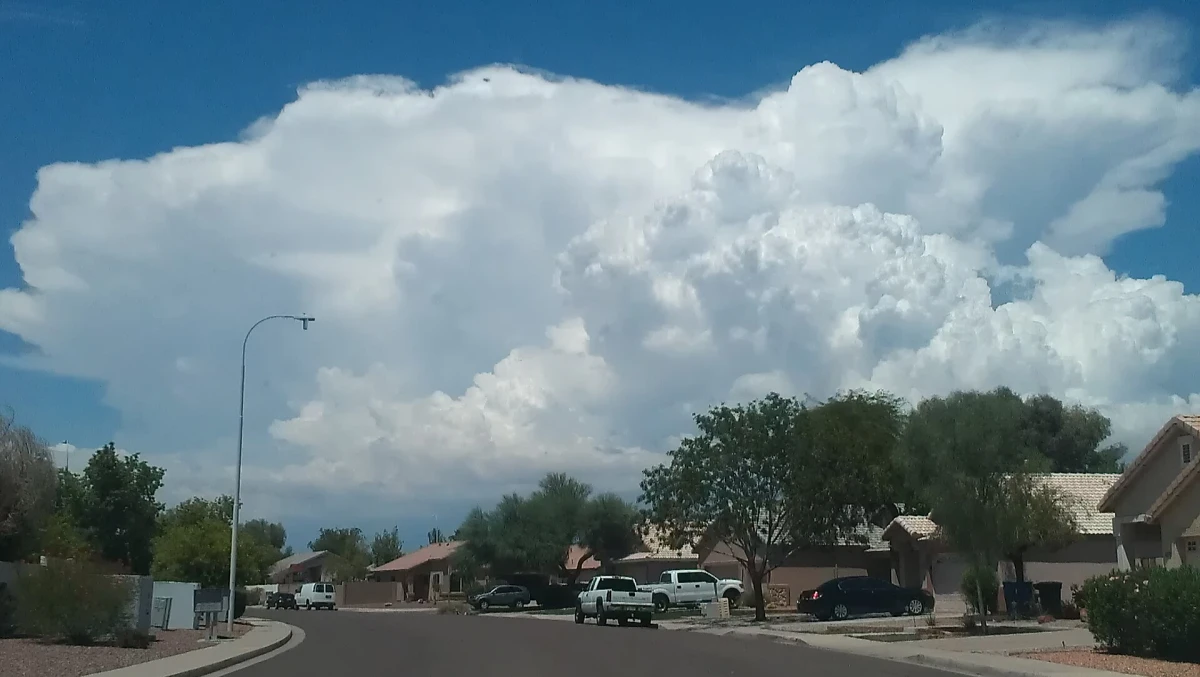
On August 25, 2025, a monsoon storm left as many as 54,000 SRP customers in the Phoenix area without power at its peak, and APS had up to 12,000 out, mostly in Buckeye and central Phoenix (AZFamily, August 26, 2025). By the next morning SRP was down to about 100 customers still out. That is the common case. A few hours, which is right inside the 4 hour fridge window if you keep the door shut.
The long ones happen too. In July 2022, APS said 32,000 of its customers lost power at the height of a week of storms, and about 7,000 in Eloy and Arizona City stayed out for days, into the next Wednesday morning (APS newsroom, July 20, 2022). That is past the freezer window. Plan for the short outage and keep a cooler ready for the long one.
Heat is the other Arizona factor. When the power drops, the air conditioner drops with it, and the kitchen starts to warm. The FDA cuts the time for food left out from 2 hours to 1 hour above 90°F for that reason. Do not carry the fridge food out to the patio or the garage to sort it. Sort it fast, inside, and get the keepers into a cooler.
What to Keep and What to Toss
This list is pulled from the full FoodSafety.gov refrigerated food chart. It covers food that sat above 40°F for more than 2 hours. When you are not sure, the federal advice is short. When in doubt, throw it out.
| Food in the fridge | Above 40°F for more than 2 hours |
|---|---|
| Raw or cooked meat, chicken, fish, lunchmeat, hot dogs, bacon | Toss |
| Milk, cream, yogurt, sour cream, soy milk | Toss |
| Eggs and egg dishes | Toss |
| Soft and shredded cheese, like mozzarella, queso fresco, cottage, cream cheese | Toss |
| Hard cheese, like cheddar, Swiss, Parmesan | Keep |
| Butter and margarine | Keep |
| Leftovers, pizza, cooked rice, pasta and potatoes | Toss |
| Cut fruit and cut vegetables, bagged salad greens | Toss |
| Whole fruit and whole vegetables | Keep |
| Opened mayo and creamy dressings | Toss after 8 hours above 50°F |
| Ketchup, mustard, taco sauce, pickles, peanut butter, jelly | Keep |
| Opened spaghetti sauce | Toss |
| Bread, tortillas, muffins | Keep |
| Opened baby formula | Toss |
The pattern is easy to remember. Meat, dairy, eggs, soft cheese and anything already cooked or cut goes. Hard cheese, butter, whole produce, bread and most jars of condiments stay.
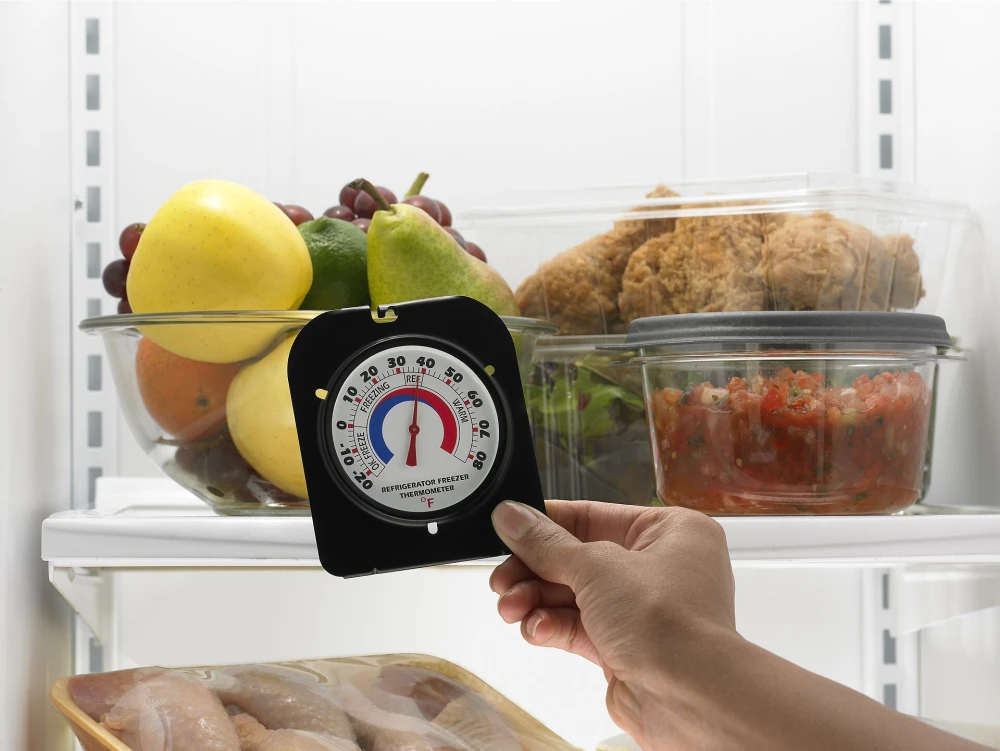


The only way to know where the 40°F line is, is to measure it. The FDA tells you to keep an appliance thermometer in both the fridge and the freezer. The fridge should read 40°F or below and the freezer 0°F or below. It turns a guess into a fact the next time the lights go out.
The Freezer Rules
Frozen food gets a second chance. FoodSafety.gov says food can be refrozen if it still has ice crystals or reads 40°F or below. The texture may suffer, but it is safe. Check each package, because the top of the freezer thaws first.
- Meat, chicken and fish. Refreeze if it still has ice crystals. Toss if it sat above 40°F for more than 2 hours.
- Ice cream and frozen yogurt. Toss once it has thawed, even if it still feels cold.
- Hard cheese, bread, waffles and flour. These can be refrozen either way.
- Frozen meals and pizza. Refreeze with ice crystals. Toss if they warmed above 40°F for more than 2 hours.
The FDA adds that if you keep refrigerated or thawed meat, chicken, fish or eggs, cook each one all the way through to a safe internal temperature.
Get Ready Before the Next Monsoon
These steps are from the FDA.
- Put an appliance thermometer in the fridge and one in the freezer.
- Freeze a few jugs of water. They keep the freezer full and cold, and the melt is drinking water.
- Freeze leftovers, milk and meat you will not use soon, and group frozen food together so it stays cold longer.
- Keep a cooler and frozen gel packs on hand for any outage past 4 hours.
- Know where to buy block ice and dry ice near you before you need it.
APS also tells customers to keep their phone and email up to date on their account so the utility can reach them during an outage (APS). If you are on SRP, the same idea applies. Knowing the restore time tells you whether you are dealing with a 2 hour problem or a 2 day problem.
When the Power Comes Back and the Fridge Does Not
Food safety pages skip this part. The lights come back, the clocks blink, and the fridge is still warm an hour later. Go through these in order before you pay for a service call.
- Check the display. Some Whirlpool models show a Power Outage alert and beep three times. Touch a button to clear it (Whirlpool Product Help).
- Make sure cooling is on. Whirlpool says some refrigerators must be turned back on by hand after a power outage or a power surge. Your owner manual shows how for your model.
- Check the breaker and the outlet. Plug a lamp into the same outlet. If the lamp is dead, it is a power problem, not a fridge problem.
- Give it time. Whirlpool says it can take several hours for a fridge to settle after it is loaded with warm items, and a new freezer gets 24 hours to reach temperature. A fridge that sat warm through an outage is in the same spot. Keep the door shut and check again in a few hours.
- Listen. You should hear the compressor hum and a fan run. Lights on but no hum and no fan after a few hours points to a part.
At that point our refrigerator not cooling guide walks through the likely parts. A fridge that clicks every few minutes but never starts often has a bad start relay. Lights and display acting strange can mean the control board. A dead compressor is the big repair, and our refrigerator repair cost guide helps you decide if the fridge is worth fixing.
If you need a hand, you can browse refrigerator repair companies or find a local repair company by city. Have your model number ready. Our guide shows where to find your model number.
Studies and Pages
- FoodSafety.gov, Food Safety During Power Outage, refrigerated and frozen food charts, last reviewed August 8, 2024.
- U.S. Food and Drug Administration, Food and Water Safety During Power Outages and Floods.
- Arizona Public Service, Severe monsoon storms take down more than 400 APS power poles in one week, July 20, 2022.
- AZFamily, Most power outages restored after monsoon hits metro Phoenix, August 25 and 26, 2025.
- Whirlpool Product Help, Not Cooling, Freezer Section, Refrigerator.
Photos from Wikimedia Commons. Monsoon clouds by Syroco under CC BY-SA 3.0. Appliance thermometer by the U.S. Department of Agriculture, public domain. Chart made by us from the FoodSafety.gov and FDA numbers above.
All sources opened in October 2026.
Quick Questions
How long can a fridge go without power overnight?
About 4 hours with the door closed, per FoodSafety.gov. If the power was out all night, meat, milk, eggs, soft cheese and leftovers that sat above 40°F for more than 2 hours should be thrown out. Hard cheese, butter, whole fruit, bread and most condiments can stay.
Is it safe to refreeze thawed food?
Yes, if it still has ice crystals or reads 40°F or below. FoodSafety.gov says the quality may drop but it is safe. Ice cream that thawed should be tossed.
Is milk still good if the power was out for 6 hours?
No, not if the fridge got above 40°F. Six hours is past the 4 hour window for a closed fridge, and milk is on the FoodSafety.gov discard list after more than 2 hours above 40°F. A fridge thermometer that still reads 40°F or below is the only way to keep it.
Can I tell if food is bad by smelling it?
No. The FDA says you cannot rely on how food looks or smells after an outage. Go by the time and the temperature, and never taste it to check.
Why is my fridge not cooling after a power outage?
First check that cooling is turned on, since Whirlpool says some models must be switched back on by hand after an outage or surge. Then check the breaker and give it a few hours with the door shut. Lights on but no hum or fan after that points to a part like the start relay, control board or compressor.
How long does a freezer stay frozen without power?
About 48 hours if it is full and about 24 hours if it is half full, as long as the door stays closed. For a long outage, the FDA says 50 pounds of dry ice should keep a full 18 cubic foot freezer cold for two days.
Other Fixes
More from the blog
Every six months, sooner if flow slows or ice shrinks. What a fridge filter does with Phoenix water, why it misses hard water, and how to spot fakes.
Once a year is the answer for most Arizona homes, and sooner after a dust storm or with a long or roof vent. The schedule, the code limits and the warning signs.
A standard fridge is built for 55 to 110 degree rooms, and Phoenix averages 106.5 in July. What happens, what garage ready means, and how to help your fridge.
White film on glasses is usually hard water scale, and Phoenix water is very hard. It covers how to tell scale from etching, how to clean it off, and how to stop it coming back.
Kenmore has never had one factory. Other makers built its appliances. The three digits before the dot in a Kenmore model number usually tell you which one.
GE Appliances has been owned by Haier since 2016. Frigidaire has been part of Electrolux since 1986. That shapes parts, warranties and repairs.
Maytag, KitchenAid, Amana and JennAir appliances are all Whirlpool Corporation brands. The family fits together a few ways, and that matters when one of them needs a repair.
Ten safe checks to run before you book an appliance repair, from power and filters to model numbers, so you save time and sometimes the call.
What common appliance repairs cost in Arizona, why prices vary, and a simple rule for deciding whether to repair or replace your machine.
A plain checklist for picking a local appliance repair company, from reviews and fees to warranties, plus how to use the directory to compare options.
Where to look for the model and serial number on a washer, dryer, fridge, dishwasher and range, and why that number decides which part fits.
A nut driver is the most used hand tool in appliance repair. Learn what it is, which sizes to buy, and how it differs from a screwdriver or a socket set.
Find a washer repair pro near you.
Browse independent appliance repair companies by city, ratings, hours, and phone numbers, no middleman.