Refrigerator Not Cooling? What to Check First and What It Costs in Arizona
The most urgent call in appliance repair, food is on the clock. "Not cooling" spans everything from a $100 relay to a dead compressor, and the sounds and symptoms narrow it fast. Clicking every few minutes points at the relay. Running constantly but barely cold points at airflow or defrost. Total silence points at power or controls.
A refrigerator that is not cooling is most often a dirty coil, a dead fan, a frosted evaporator or a $20 relay, and five of those six fixes cost under $350 in Arizona. Start with the free checks below, then match what you hear and feel to the cause.
Food is on the clock. A closed fridge holds about four hours without power. In Arizona, add the heat, because a garage fridge in July can run outside its rated range and look broken when it is only overworked.
Refrigerator Not Cooling costs $100 to $450 for a pro repair in Arizona, parts and labor included.
- Parts $20 to $300, labor $100 to $300, about 1 to 2 hours on site.
- Priciest fix is the compressor or refrigerant leak, up to $1,200.
- 5 of 6 common causes are DIY friendly. Difficulty is pro.
- Diagnose before deciding, the majority of not cooling calls end at a relay, fan, coil cleaning, or defrost part, all well under $350.
Averages for independent repair companies. The service call fee of $75 to $150 is usually applied toward the repair. Costs vary by brand, model, and city.
The Short Version
- Move the thermostat one notch colder and wait 24 hours. A new unit or a unit after an outage needs that long to settle.
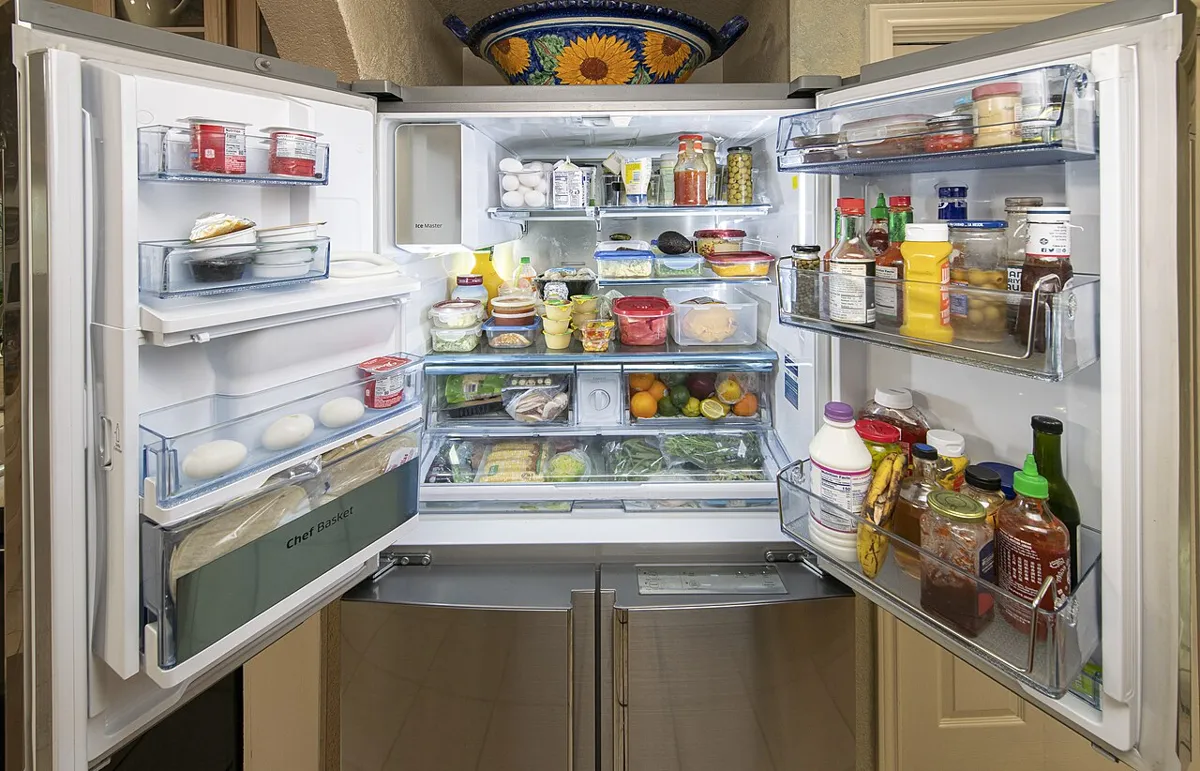
- Look at the back vents and the door. Packed food, a bent gasket or a door that will not swing shut warms the box.
- Pull the fridge out and look at the coils. Thick dust or pet hair is the cheapest fix on this page, $0 to $150.
- Listen. Clicking every few minutes points at the start relay. A fridge that runs all day and never gets cold points at airflow, frost or the sealed system.
- Check the room. In a hot Arizona garage the fridge may simply be outside its rated temperature range.
- Do not unplug it before the tech arrives. The symptoms need to be there for the diagnosis.
Free Checks You Can Do in 5 Minutes
Start with the boring stuff. Most calls that end at "the fridge is fine" end here. Safety first, so unplug the fridge before you touch any panel, fan or coil.
Check the power. Look for a light inside or a lit display. Frigidaire says the outlet should be grounded, 115 to 120 volts, on a 15 or 20 amp circuit, and to try the GFCI reset if one feeds the plug (Frigidaire not cooling guide). After an outage or a new install, give it 24 hours.
Check the setting. Frigidaire lists factory defaults of 37°F for the fridge and 0°F for the freezer, with a working range of 33°F to 47°F and -6°F to 6°F. If someone bumped the dial to the warm end, that is your whole problem.
Check the door. The GE guide says the door should swing shut on its own from about halfway open, and that you can fix a front tilt with the leveling legs (GE not cooling checklist). Run the dollar bill test from Frigidaire. Close the door on a bill and tug. If it slides out with no pull, the gasket is leaking cold air.
Check the light. GE says the interior light should go out when the door is open about 1 inch. A light that stays on adds heat.
Check the airflow. Tall jars against the back wall can block the vents. Pull them forward and leave gaps between packages.
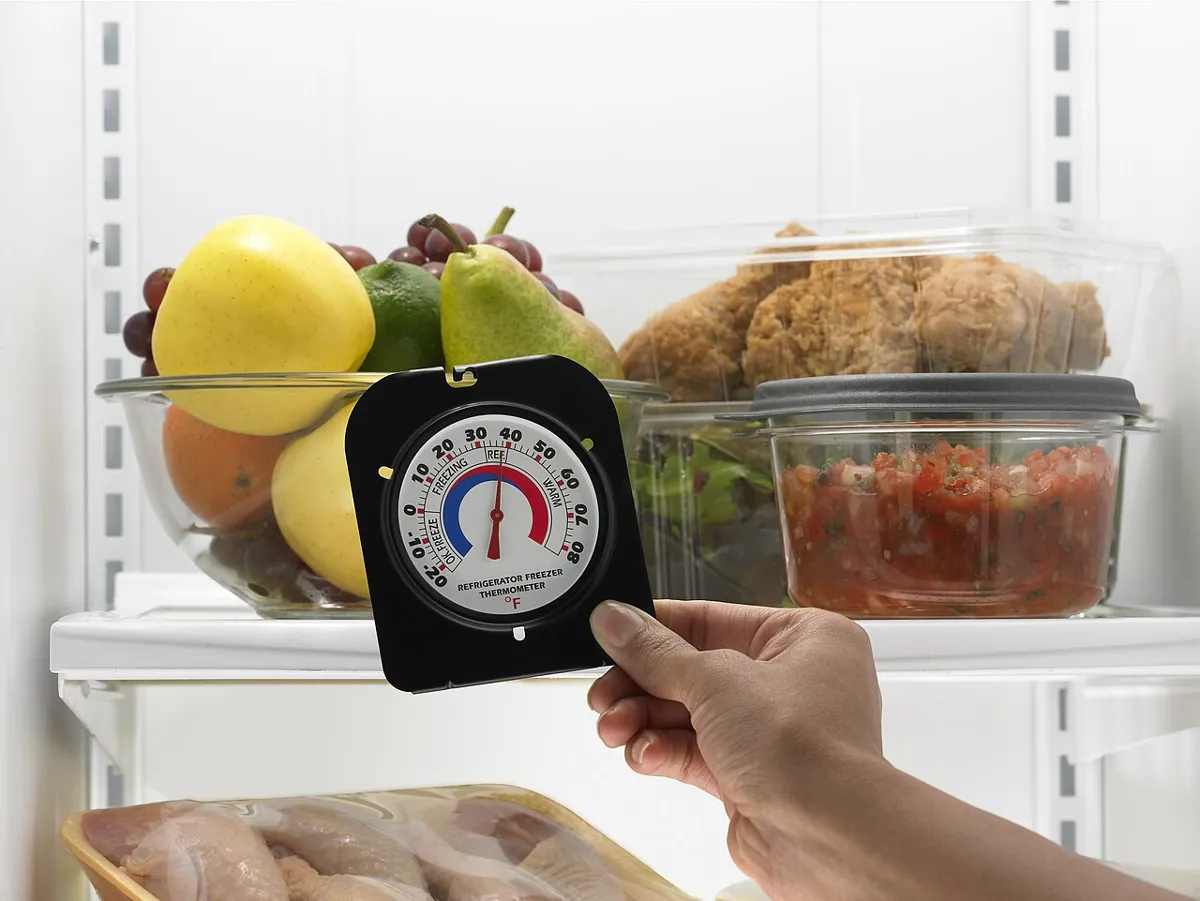
Put a thermometer in. The FDA says to keep the fridge at 40°F or below and the freezer at 0°F, and to use an appliance thermometer to check. A cheap dial one costs a few dollars and settles the argument in an hour.


Cause 1. Dirty Condenser Coils
The coils dump the heat the fridge pulled out of your food. When dust and pet hair coat them, the heat has nowhere to go. The compressor runs longer, the box warms slowly, and the back of the fridge feels hot. See our glossary entry on the condenser.
How to test. Unplug the fridge, pull it out, and look at the coils at the back or behind the bottom front grille. If you see a gray fuzz mat, clean them.
Cost and who does it. $0 to $150. DIY friendly. Use a coil brush and a vacuum. Our step by step guide, how to clean refrigerator condenser coils, takes 20 to 30 minutes.
One note. GE says many units made since 2001 have coils that do not need cleaning, but compact and smaller top freezer models still do (GE). Your manual tells you which kind you own.
Cause 2. Start Relay or Capacitor
The start relay gives the compressor its kick. When it fails, you hear a click every few minutes and the compressor never settles into a hum. The box slowly warms.
How to test. Unplug the fridge, pull the relay off the side of the compressor and shake it. A rattle means a bad relay. A pro can also confirm it with a test cord.
Cost. $100 to $200 total, the cheapest repair that involves a part. The part itself runs $20 to $40. If the compressor is seized, you get the same click, so be sure of the diagnosis before you buy the part. The compressor entry explains why.
Cause 3. Evaporator Fan Not Moving Air
The evaporator fan pushes cold air from the freezer coil into the fresh food side. When it dies, the freezer stays cold and the fridge warms up. You may hear nothing, or a loud buzzing or scraping from the back wall of the freezer.
How to test. Open the freezer door and press the door switch. The fan should spin. If it does not, or you hear ticking, the fan or its blade is bad.
Cost and who does it. $150 to $300. DIY friendly with basic tools. See how to replace a refrigerator evaporator fan and the evaporator fan glossary page.
Cause 4. Defrost System Failure
Every few hours the fridge melts frost off the evaporator coil. If the heater, sensor or timer fails, frost builds into a block of ice and air cannot pass. Cooling fades over days. A manual defrost makes it work again for a few weeks, then it fails again.
How to test. Look at the back wall of the freezer. A thick, uneven frost layer on the panel is the sign. Read about the defrost cycle if the terms are new.
Cost. $150 to $350. It is DIY friendly for a handy person, but the parts list is long. Our page on a freezer cold but fridge warm covers the same failure in more detail.
Cause 5. Condenser Fan Dead
The condenser fan pulls room air over the coils and the compressor. When it stops, the compressor runs hot and may shut itself off on its overload protector, then try again. The bottom back of the fridge feels hot.
How to test. Pull the lower rear panel with the fridge unplugged. Spin the blade by hand. It should move freely. When you plug it in, the fan should turn while the compressor runs.
Cost. $150 to $280. DIY friendly.
Cause 6. Compressor or Sealed System Leak
This is the bad one. The fridge runs without stopping and never gets cold, or the compressor is silent and hot. The sealed system holds refrigerant, and opening it takes EPA certification. That is a pro job.
How to test. You cannot test it at home. A tech checks pressures, current draw and the compressor windings.
Cost. $500 to $1,200. Rule out every cheaper cause first.
What Each Fix Costs, Side by Side
Bars run on a 0 to 1,200 dollar scale and end at the top price of each range. Prices are the Arizona ranges on this page. Chart made by us from those numbers.
Five of the six causes cost under $350. Only the sealed system pushes past it. That is why a diagnosis comes before any talk of replacing the fridge.
The Arizona Angle
Garage fridges and the room limit. Every refrigerator is rated for a range of room temperatures. GE says its units can struggle in rooms below 60°F or above 110°F (GE). A closed Arizona garage in July can get there. Phoenix Sky Harbor averages a July high of 106.5°F, and a garage in the afternoon sun runs hotter than the air outside. Our guide on keeping a refrigerator in a garage in Arizona has the full numbers.
Check the room range. The install guide for your model lists the room temperatures it is built for. GE says its refrigerators may not cool properly in a spot below 60°F or above 110°F (GE). A garage in a Phoenix July can pass that, and then no repair will keep the fridge cold.
What heat does. When the room is hot, the coils cannot shed heat. The fridge runs nearly nonstop and the overload protector may click the compressor off. That clicking is not always a bad part. It can mean the room is winning. Move the fridge inside, shade it, or buy a model built for the heat.
Dust. Valley dust, monsoon haboobs and pet hair all land on the coils. In a dusty home or garage, clean them twice a year. GE also asks for at least 1 inch of clearance on the sides, top and back.
Monsoon outages. On August 25, 2025, a haboob and thunderstorm knocked out power for as many as 54,000 SRP customers and up to 12,000 APS customers in the Phoenix area (azfamily). Ready.gov says a closed fridge keeps food cold for about four hours and a full freezer for about 48 hours. It also says to unplug sensitive appliances, since power can return with surges.
After the power returns. Frigidaire says to allow 24 hours for temperatures to settle. A fridge that warms up after a surge may just need that time. If the food was above 40°F for more than two hours or you do not know how long, the FDA says to discard it.
Looking for help near you? Browse Phoenix or Tucson appliance repair pros.
When to Call a Pro and What to Say
Call if the quick checks and the coil clean did not help, if you hear a click every few minutes, or if the compressor is silent. Call the same day if food is at risk. Browse our refrigerator repair directory for Arizona companies.
Leave the fridge plugged in, as GE advises, so the symptoms are still there when the tech arrives. Then say these things on the phone.
- The brand, model number and age. The model plate is inside the fridge or on the back.
- Which side is warm. Fridge only, freezer only, or both.
- What you hear. Clicking, buzzing, constant running, or silence.
- What you already tried. Coils cleaned, thermostat changed, door checked.
- Where it sits. A garage or patio matters in Arizona.
The service call fee is $75 to $150 and usually goes toward the repair.
Repair or Replace?
If the fix is a relay, fan, coil cleaning or defrost part, repair it. Those are all under $350. ENERGY STAR bases its savings math on a 12-year product lifetime, so a fridge well inside that lifetime is usually worth fixing.
A sealed system repair at $500 to $1,200 is where the choice gets hard. ENERGY STAR says fridges over 15 years old can cost about $95 a year more to run, and that an old second fridge should be recycled. If your unit is that age and the compressor is gone, replace it. A new one in a garage should be a model rated for the heat.
What causes it, and what each fix costs
Start relay / capacitor
Click… click… click with a warm fridge = the relay failing to start the compressor. Cheapest fix on the list and extremely common.
Dirty condenser coils
Coils packed with pet hair can’t shed heat. Cooling fades and the compressor overworks. Cleaning is cheap or free.
Evaporator fan dead
Freezer may stay cold while the fridge warms, no air circulating up.
Defrost failure (iced over evaporator)
Frost seals the evaporator. Cooling fades over days, and a manual defrost temporarily "fixes" it. See the defrost guide.
Condenser fan dead
Compressor runs hot and cuts out. Warm at the bottom rear.
Compressor or refrigerant leak
Runs constantly, never gets cold, compressor hot or silent, the sealed system scenario.
Repair or replace?
Diagnose before deciding, the majority of not cooling calls end at a relay, fan, coil cleaning, or defrost part, all well under $350. Only a confirmed sealed system failure forces the big decision.
Sources
Where the safety, regulatory and warranty claims on this page come from. Repair costs are our own figures based on Arizona market rates and OEM parts pricing.
- Food Safety During a Power Outage FoodSafety.gov (U.S. Dept. of Health & Human Services) The 40°F threshold and the 2-hour rule for discarding perishable food.
- Stationary Refrigeration and Air Conditioning (Section 608) U.S. Environmental Protection Agency Refrigerant handling rules and the certification required to open a sealed system.
- Section 608 Technician Certification U.S. Environmental Protection Agency Which certification type covers household refrigerators and freezers.
Sources we checked
- products.geappliances.com
- owner.frigidaire.com
- fda.gov
- ready.gov
- energystar.gov
- azfamily.com
- lbkappliance.com
Last checked October 20, 2026.
We'll quote you on hauling it away, or buying it.
Not every refrigerator is worth repairing, and we'd rather tell you that than sell you a repair. If you're replacing it, we'll give you a free quote either way. Scrap pickup for a machine that's finished, or a cash offer if it still has life in it. Working units, recent models and premium brands are often worth real money.
Quick Questions
Why is my refrigerator not cooling but the freezer is cold?
The evaporator fan or the air path between the freezer and the fridge is the usual cause. A dead fan, a frosted coil or blocked vents will do it. A fan swap costs $150 to $300 in Arizona.
Why is my refrigerator running but not cooling?
Common causes are dirty condenser coils, a dead condenser fan or a failed defrost system. A sealed system leak is rarer but costs $500 to $1,200. Start with the coils and the vents.
How long can food stay in a refrigerator that is not cooling?
A closed fridge keeps food cold for about four hours, and a full freezer for about 48 hours, per Ready.gov. Discard perishables that have been above 40°F for over two hours.
How long does a fridge take to cool down after it is plugged in?
About 24 hours, per GE and Frigidaire. Do not judge a new or restarted fridge before then.
Will a hot Arizona garage stop a fridge from cooling?
It can. Many fridges are rated for rooms up to 110°F, and a closed garage in July can pass that. Check the rating plate for a climate class or the install guide for a range.
Should I unplug a fridge that is not cooling?
Only to clean it or to reset after an outage. If a tech is coming, leave it plugged in so the problem shows up on their test.
Is it worth fixing a 15 year old refrigerator?
Fix it if the repair is $350 or less. If the sealed system is gone, replace it. ENERGY STAR says fridges over 15 years old cost about $95 a year more to run.
My fridge died, how long is food safe?
Closed doors keep a fridge safe about 4 hours, a full freezer about 48 (24 if half full). Coolers and ice buy more. When in doubt, throw it out.
It clicks every few minutes and won’t cool, what is that?
The compressor start relay trying and failing. It’s a $20 to $40 part. A tech can often confirm it in one visit with a test cord. If the compressor itself is seized, the same click happens, which is why diagnosis matters.
Why did it start cooling again after I emptied it?
You probably let an iced over evaporator thaw (a de facto manual defrost). The defrost system failure is still there, it will ice over again in 1 to 2 weeks.
Model specific guides for this problem
Find a refrigerator repair pro near you.
Browse independent appliance repair companies by city, ratings, hours, and phone numbers, no middleman.