How Often Should You Clean a Dryer Vent in Arizona?
Once a year is the answer for most Arizona homes, and sooner after a dust storm or with a long or roof vent. The schedule, the code limits and the warning signs.
Clean the dryer vent once a year in Arizona, and check the outside hood after every big dust storm. Whirlpool tells owners the vent must be cleaned every one to two years, or sooner when drying slows down. Here we take the short end of that range. Desert dust, long duct runs and roof vents all push lint buildup faster, and a clogged vent is the top reason dryers catch fire.
We list more than 600 appliance repair companies across Arizona and keep a guide for every common dryer fault. Loads that take two cycles. A dryer that shuts off halfway. A blown thermal fuse. Our own repair guides point to the vent as a first check for each of those, before you buy a part. This post is the schedule, the reasons behind it and the checks you can do in five minutes.
Answer Box
- Lint screen. Clean it before or after every load. That is the federal safety advice from the U.S. Consumer Product Safety Commission.
- Full vent run. Once a year for most Arizona homes. Every six months if the duct is long, goes out the roof, or the dryer runs most days.
- Outside hood. Look at it once a month and after every dust storm. The flap should open when the dryer runs.
- Inside the dryer cabinet. Have a pro clean it now and then, as the CPSC also advises. Lint packs in around the heater and blower.
- Clean it now if clothes need two cycles, the dryer is hot to the touch, or you smell something burning.
Why a Clogged Vent Matters
The U.S. Fire Administration studied home dryer fires from 2008 to 2010. In its August 2012 report it found about 2,900 dryer fires in homes each year, with an estimated 5 deaths, 100 injuries and $35 million in property loss. Failure to clean was the leading cause, at 34 percent. Dust, fiber and lint were the first thing to burn in 28 percent of those fires.
The way it happens is simple. Lint is the small fibers that come off your clothes. The screen catches most of it. The rest rides the hot, wet air out through the duct. It sticks where the duct bends, sags or has a rough seam. Over months the opening gets smaller, the air slows down and the heat stays in the dryer. The CPSC says lint can block the flow of air, cause too much heat to build up and lead to a fire in some dryers.
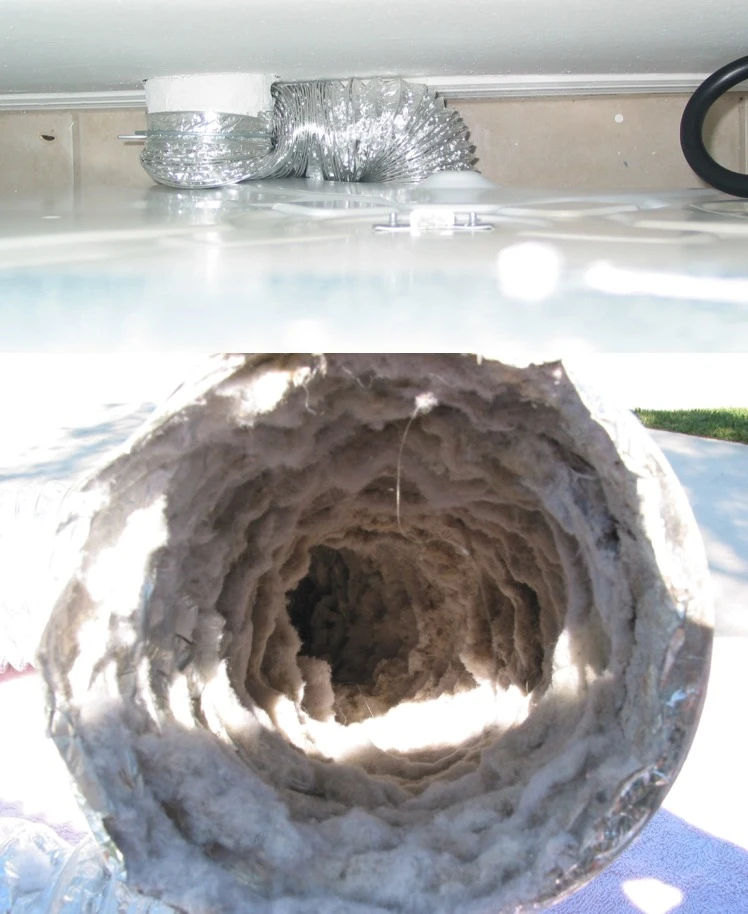
Before a fire, a blocked vent costs you money in other ways. Loads take longer. The heating element and the thermal fuse work harder and fail sooner. That is why our dryer takes too long guide sends you to the vent before any part.
The Arizona Factors Nobody Else Mentions
Most dryer vent advice was written for Minnesota, Georgia and the rest of the country. It tells you fall is the time to clean because people dry more in winter. That is true where it snows. Arizona has its own reasons to clean.
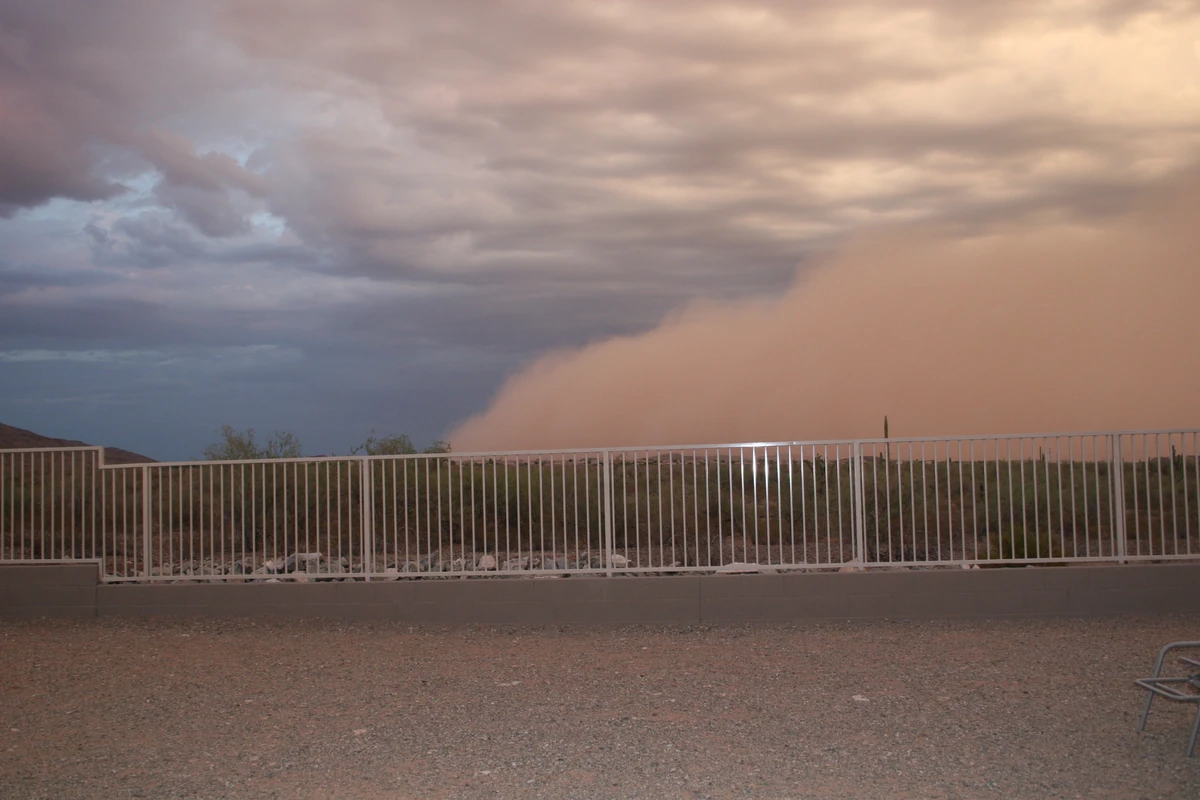


- Dust storms. NOAA says one to three large dust storms move into the Phoenix area in a given year, with walls of dust that can reach 10,000 feet (NOAA, 2012). On August 25, 2025, the National Weather Service in Phoenix reported visibility near zero in Arizona City, Casa Grande and Florence, and gusts of 50 to 65 mph across the metro (NWS Phoenix). Dust that gets past a stuck flap mixes with lint and sticks inside the duct.
- Roof vents. When the laundry room sits in the middle of the house, the duct often runs up and out through the roof. A roof vent fights gravity, has more bends and is hard to see. You will not notice a jammed roof cap from the yard.
- Garage laundry. Garages hold dust, yard debris and stored boxes. A crushed foil duct behind a garage dryer is one of the easiest problems to spot and fix.
- Heat. A garage dryer on a summer afternoon pulls in air that is already hot. Strong airflow is the only thing carrying that heat back out.
So we do not tie the cleaning to a season. Pick a month you will remember, clean once a year, and add a quick hood check after every big storm.
How Often to Clean, by Home
This is our schedule for Arizona homes. The floor comes from Whirlpool, which says the vent must be cleaned every one to two years (Whirlpool Product Help). We moved most homes to the faster end for the reasons above. Your owner manual comes first if it says something different.
| Your setup | Clean the full vent |
|---|---|
| Short wall vent, one or two people, a few loads a week | Every 12 months |
| Family of four or more, or loads most days | Every 6 to 12 months |
| Pets that shed, lots of towels or bedding | Every 6 to 12 months |
| Roof vent, or a long run with three or more bends | Every 6 months |
| Vent hood faces a dirt yard or open desert | Every 12 months, plus a hood check after each dust storm |
| Second home or winter rental used a few months a year | Every 12 months, and a hood check when you arrive |
If two rows fit your home, use the shorter time.
The Duct Length Math
How long your duct is decides how fast it clogs. The International Residential Code, a model code that cities adopt with their own changes, caps a dryer exhaust duct at 35 feet from the dryer connection to the outside. Every bend counts against that. A sharp 90 degree elbow takes away 5 feet. A sharp 45 degree elbow takes away 2.5 feet (IRC section M1502.4.5.1, 2015 text as printed by Seattle). The dryer maker's own install chart can set a different limit, and your city's adopted code is the one that applies.
Dark bar is the straight duct you are allowed. Light bar is what the sharp 90 degree elbows used up. Figures from IRC Table M1502.4.5.1, 4 inch mitered elbows.
Try it on a real layout. A laundry room in the middle of a house has a duct that goes up 8 feet, turns twice, and runs 14 feet across the attic to a roof cap. That is 22 feet of pipe plus two 90 degree elbows worth 10 feet. The total is 32 feet against a 35 foot limit. It is legal, but just barely, and that run should be cleaned every six months.
The same code text also says the duct must be smooth metal, 4 inches across, and the flex hose behind the dryer can be no longer than 8 feet. The outside end must have a backdraft flap, and no screen may go on it. That last rule matters here. People add a screen to keep birds out, and the screen catches lint and clogs.
Five Signs It Needs Cleaning Now
- Loads take two cycles. The CPSC says clothes that are still damp after a normal cycle can mean a blocked screen or duct.
- The outside flap barely moves. Go outside while the dryer runs on high heat. You should feel a strong, warm push of air. The CPSC tells owners to check this and says weak flow can mean a blockage.
- The dryer or the room gets very hot. Heat that cannot leave stays in the cabinet.
- A burning smell. Stop the dryer and clean the vent before the next load.
- A check vent light or a blown fuse. Some newer dryers sense poor airflow and light a warning. A thermal fuse that has blown more than once is a vent problem until proven otherwise.
Do It Yourself or Call a Pro
A short wall vent is an easy weekend job. Pull the dryer out, unplug it (and shut off the gas on a gas dryer), take off the flex hose, and run a brush kit through the duct from both ends. Our step by step guide on how to clean a dryer vent walks through it. While you are back there, swap any white plastic or foil accordion hose for metal. The CPSC says that kind of hose traps lint more easily and kinks or crushes.
Call a pro for a roof vent, a run longer than about 20 feet, a duct hidden in the walls, or a dryer that still dries slowly after you cleaned it. Our dryer vent cleaning cost guide has the Arizona price range. If the vent is clear and the dryer still runs hot or slow, the problem is in the dryer itself. You can browse washer and dryer repair companies or find a local repair company by city.
Studies and Pages
- U.S. Fire Administration, Clothes Dryer Fires in Residential Buildings (2008 to 2010), Topical Fire Report Series Volume 13, Issue 7, August 2012.
- U.S. Consumer Product Safety Commission, Overheated Clothes Dryers Can Cause Fires, Publication 5022.
- Whirlpool Product Help, How to Check Venting.
- International Residential Code, Chapter 15, section M1502, 2015 text as published in the Seattle Residential Code.
- NOAA, Haboobs. Phenomena With the Unusual Name Is No Joke, August 21, 2012.
- National Weather Service Phoenix, August 25, 2025 Dust Storm and Flash Flooding.
Photos from Wikimedia Commons. Dryer hose by Rick Harpenau under CC BY 3.0. Dust storm by John Jurik, released to the public domain.
All sources opened in October 2026.
Quick Questions
How often should you clean your dryer vent?
Once a year for most Arizona homes. Whirlpool says every one to two years, or sooner when drying slows. Go to every six months with a roof vent, a long duct with several bends, pets, or a dryer that runs most days.
What are the signs of a clogged dryer vent?
Clothes that need two cycles, a dryer or laundry room that gets very hot, a burning smell, a check vent light, and an outside flap that barely moves while the dryer runs on high heat.
Is it better to clean dryer vents from inside or outside?
Both. Brush from the dryer end with the flex hose off, then from the outside hood, so lint is pushed out and not packed into the middle. A roof vent is a job for a pro because of the climb and the bends.
Can you clean a dryer vent with a vacuum?
A vacuum gets the loose lint at each end and the lint screen slot. It cannot reach lint stuck in the middle of the duct. Use a rotary brush kit for the full run, then vacuum what it pulls out.
Should there be a screen on my outside dryer vent?
No. The model residential code says screens shall not be installed at the dryer duct outlet, because they catch lint and clog. Use a vent hood with a working backdraft flap instead.
Do dust storms clog dryer vents?
They can add to it. Dust that blows past a stuck or broken flap mixes with damp lint inside the duct. Check the outside hood after a big storm and clear anything packed around the flap.
Other Fixes
More from the blog
Every six months, sooner if flow slows or ice shrinks. What a fridge filter does with Phoenix water, why it misses hard water, and how to spot fakes.
About 4 hours in a closed fridge, 48 in a full freezer. What to keep, what to toss, the Arizona heat rule, and what to do if the fridge will not restart.
A standard fridge is built for 55 to 110 degree rooms, and Phoenix averages 106.5 in July. What happens, what garage ready means, and how to help your fridge.
White film on glasses is usually hard water scale, and Phoenix water is very hard. It covers how to tell scale from etching, how to clean it off, and how to stop it coming back.
Kenmore has never had one factory. Other makers built its appliances. The three digits before the dot in a Kenmore model number usually tell you which one.
GE Appliances has been owned by Haier since 2016. Frigidaire has been part of Electrolux since 1986. That shapes parts, warranties and repairs.
Maytag, KitchenAid, Amana and JennAir appliances are all Whirlpool Corporation brands. The family fits together a few ways, and that matters when one of them needs a repair.
Ten safe checks to run before you book an appliance repair, from power and filters to model numbers, so you save time and sometimes the call.
What common appliance repairs cost in Arizona, why prices vary, and a simple rule for deciding whether to repair or replace your machine.
A plain checklist for picking a local appliance repair company, from reviews and fees to warranties, plus how to use the directory to compare options.
Where to look for the model and serial number on a washer, dryer, fridge, dishwasher and range, and why that number decides which part fits.
A nut driver is the most used hand tool in appliance repair. Learn what it is, which sizes to buy, and how it differs from a screwdriver or a socket set.
Find a washer repair pro near you.
Browse independent appliance repair companies by city, ratings, hours, and phone numbers, no middleman.