Why Your Dishwasher Leaves White Residue in Arizona
White film on glasses is usually hard water scale, and Phoenix water is very hard. It covers how to tell scale from etching, how to clean it off, and how to stop it coming back.
Most white residue on dishes in Arizona is hard water scale. The City of Phoenix reports total hardness of 172 to 302 ppm, about 10 to 17.6 grains per gallon, across its system in its 2025 water quality report. The USGS calls anything over 180 mg/L (the same as ppm) very hard. When it heats up and dries on glass, the calcium and magnesium stay behind as a chalky white film. The good news is that scale comes off with acid and can be kept away with rinse aid and a clean machine.
Answer Box
- White film that wipes off with vinegar is mineral scale from hard water.
- Cloudy glass that does not change with vinegar may be etching, which is permanent damage.
- Keep rinse aid full, use the right amount of detergent and clean the filter often.
- Run an empty cycle with a dishwasher cleaner or citric acid about once a month.
Do the Vinegar Test First
Take one cloudy glass. Soak a paper towel in white vinegar and wrap it around the glass for five minutes. Then rinse and dry it.
- If the glass comes clear, the film was scale. That is a water problem you can fix.
- If it stays cloudy or shows rainbow streaks, the glass may be etched. Etching is tiny pits in the surface. It does not wash off.
This one test saves a lot of guessing. It tells you whether to fight minerals or to change how much soap you use.
Why Arizona Water Does This
Hard water carries dissolved minerals picked up from rock and soil. Phoenix says the minerals in its water come from the soils the source water touches on its way to the treatment plants. Its report says hardness is not regulated under drinking water health standards. It is a cleaning and wear issue.
Bars run on a 0 to 320 mg/L scale. Bands from the USGS. Phoenix range from its 2025 water quality report. Chart made by us from those numbers.
Hardness is not the only mineral number in that report. Phoenix lists total dissolved solids of 464 to 716 ppm. The EPA sets a non enforceable guideline of 500 mg/L for dissolved solids and lists hardness and deposits as what you notice above it (EPA secondary standards). That is the white crust on your faucets and your glasses.
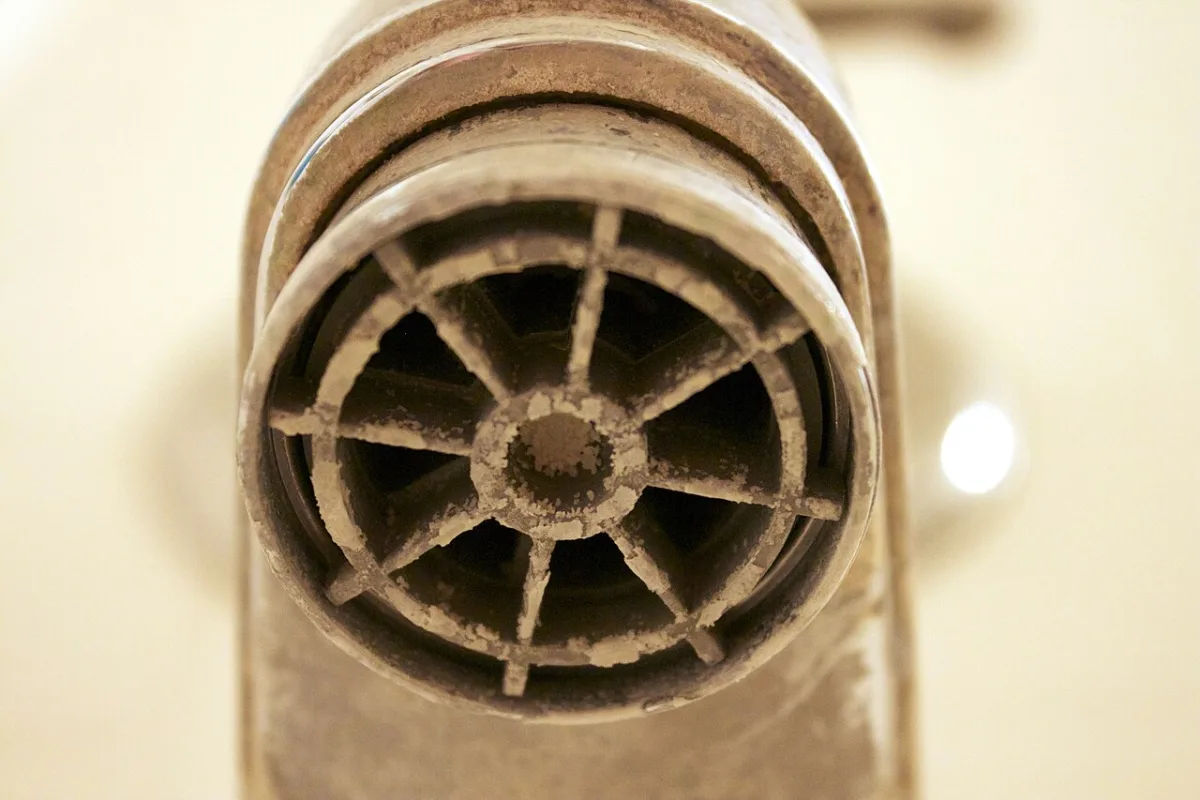
A dishwasher heats water and then lets it dry on your dishes. That is exactly how scale forms. Inside the machine, the same scale builds on the heating element, the spray arm holes and the inlet valve screen. Over time that means weaker spray, longer cycles and dishes that are not as clean.
How to Clean the Film Off Your Dishes
For glasses that already have film, soak them in a sink of warm water with a cup of white vinegar for 15 minutes, then wash as normal. For a full load, put a cup of white vinegar upright on the top rack and run a normal cycle with no detergent. Do not mix vinegar with bleach products.
Plastics and some metal finishes do not like long acid soaks. Check the care label on anything special before you soak it.
How to Descale the Dishwasher Itself
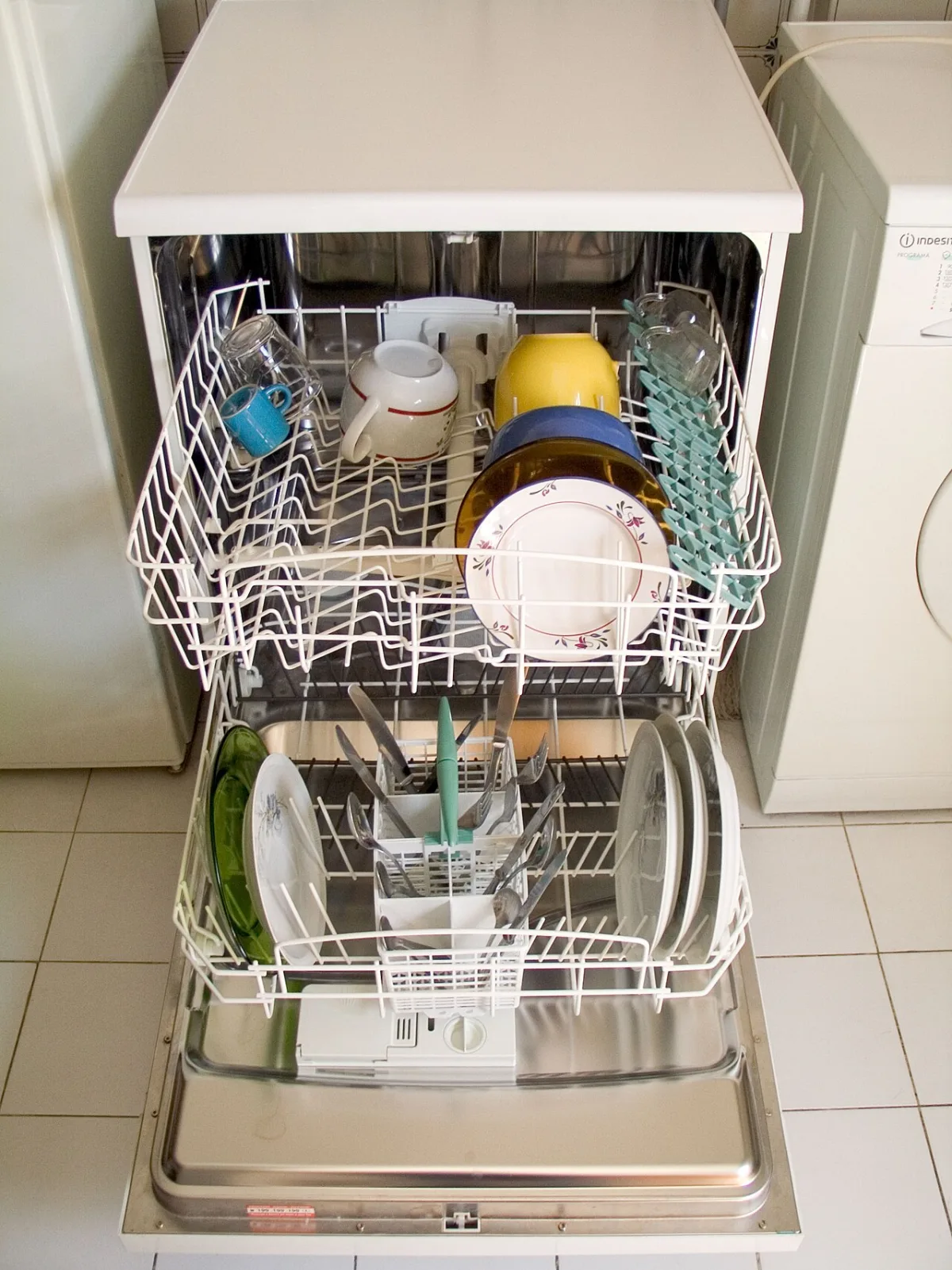


- Clean the filter. Twist it out, rinse it under the tap and scrub off any grit. Our guide on how to clean a dishwasher filter shows where it is on most models.
- Check the spray arms. Pull them off and look into the holes. Clear any white crust with a toothpick. See the spray arm entry for what they do.
- Run a descaling cycle. Use a dishwasher cleaner made for scale, or a citric acid product, in an empty machine on the hottest cycle. Follow the label.
- Wipe the door gasket and the bottom edge. Scale and food collect there and can cause leaks later.
In very hard water, once a month is a good starting point. If you see crust again sooner, do it more often.
How to Stop It Coming Back
- Keep rinse aid full. Rinse aid helps water sheet off instead of drying in drops. In hard water it makes a big difference.
- Use the water hardness setting if your machine has one. Some models let you set local hardness so they adjust rinse aid or a built in softener. The owner manual will say.
- Use the right detergent dose. Too little leaves scale. Too much, especially with softened water, can etch glass. Start with the amount the detergent maker suggests for hard water.
- Run hot water at the sink first. The first cycle fill is then hot, which helps detergent work.
- Think about a whole house softener. It protects the dishwasher, the washer, the water heater and the faucets. If you have one, you may need less detergent.
When White Residue Means a Repair
Sometimes the film is a sign the machine is not working right. Gritty residue and food bits point to a clogged filter or a weak drain. A machine that does not fill enough cannot rinse well. A dead heater means poor drying and more spots. Our guides on a dishwasher that is not cleaning and one that is not filling explain the usual causes.
If you have cleaned the filter, descaled the machine, filled the rinse aid and still see residue, it is time to have it looked at. You can find a local dishwasher repair company or browse the dishwasher repair listings.
Studies and Pages
- City of Phoenix, 2025 Water Quality Report, aesthetic water quality table, total hardness 172 to 302 ppm and TDS 464 to 716 ppm.
- U.S. Geological Survey, Hardness of Water, hardness classification bands.
- U.S. Environmental Protection Agency, Secondary Drinking Water Standards, 500 mg/L guideline for total dissolved solids.
Photos from Wikimedia Commons. Faucet scale by Bbypnda under CC BY-SA 3.0. Dishwasher by Carlos Paes, free use. Chart made by us from the USGS bands and the Phoenix report.
All sources opened October 17, 2026.
Quick Questions
Is white residue from a dishwasher harmful?
Mineral scale from hard water is not a health risk. It looks bad and it wears the machine, but it is the same minerals that are in your tap water.
How hard is Phoenix water?
The City of Phoenix 2025 water quality report lists total hardness of 172 to 302 parts per million, about 10 to 17.6 grains per gallon. Other cities and private wells differ.
Can vinegar damage my dishwasher?
An occasional cup of vinegar on the top rack is a common cleaning step. Using it every cycle is not needed. A cleaner made for dishwashers is also an option. Follow your owner manual.
Why are my glasses cloudy even after vinegar?
If vinegar does not clear them, the glass may be etched. Etching is permanent. Use less detergent, especially with softened water, to protect the rest.
Other Fixes
More from the blog
Every six months, sooner if flow slows or ice shrinks. What a fridge filter does with Phoenix water, why it misses hard water, and how to spot fakes.
About 4 hours in a closed fridge, 48 in a full freezer. What to keep, what to toss, the Arizona heat rule, and what to do if the fridge will not restart.
Once a year is the answer for most Arizona homes, and sooner after a dust storm or with a long or roof vent. The schedule, the code limits and the warning signs.
A standard fridge is built for 55 to 110 degree rooms, and Phoenix averages 106.5 in July. What happens, what garage ready means, and how to help your fridge.
Kenmore has never had one factory. Other makers built its appliances. The three digits before the dot in a Kenmore model number usually tell you which one.
GE Appliances has been owned by Haier since 2016. Frigidaire has been part of Electrolux since 1986. That shapes parts, warranties and repairs.
Maytag, KitchenAid, Amana and JennAir appliances are all Whirlpool Corporation brands. The family fits together a few ways, and that matters when one of them needs a repair.
Ten safe checks to run before you book an appliance repair, from power and filters to model numbers, so you save time and sometimes the call.
What common appliance repairs cost in Arizona, why prices vary, and a simple rule for deciding whether to repair or replace your machine.
A plain checklist for picking a local appliance repair company, from reviews and fees to warranties, plus how to use the directory to compare options.
Where to look for the model and serial number on a washer, dryer, fridge, dishwasher and range, and why that number decides which part fits.
A nut driver is the most used hand tool in appliance repair. Learn what it is, which sizes to buy, and how it differs from a screwdriver or a socket set.
Find a washer repair pro near you.
Browse independent appliance repair companies by city, ratings, hours, and phone numbers, no middleman.