Fridge Coils in Arizona, Clean Every 3 to 12 Months or Never
Clean Arizona fridge coils every 3 to 6 months in a garage or with pets, once a year in a kitchen. Most GE models since 2001 need no cleaning.
Every fridge needs its coils cleaned twice a year. That is the rule on most cleaning lists, and it is wrong for a big share of kitchens. GE says most of its refrigerators made since 2001 have a NeverClean condenser, and Whirlpool says routine cleaning usually is not needed in a normal home. Arizona flips it the other way. A garage fridge in Phoenix dust and 110 degree heat may need its coils cleaned every 3 to 6 months.
We keep Arizona price guides for every common fridge repair, and coil trouble shows up near the top of the list for a fridge that runs all day. So we built a schedule by room, a way to tell if your model even has coils you can reach, and the cost of skipping it.
- Check your model first. GE says compact fridges and smaller top freezer models still need coil cleaning.
- Kitchen, no pets. Once a year is plenty.
- Pets, garage or desert dust. Every 3 to 6 months.
- Time it for May and October. Clean before the 100 degree season and again after the monsoon dust.
- It takes about 20 minutes. A coil brush and a vacuum are all you need.
Find Out If Your Fridge Has Coils to Clean
Start here, because the answer might be never.
The condenser coil throws off the heat your fridge pulls out of the food. On older fridges it sits on the back, in plain view. On most newer ones it hides behind the base grille at the floor, or up top on a built in. GE lists all three spots. Bottom, back and top.
Many newer designs keep the coil where dust has a hard time sticking. GE calls its version NeverClean and says it does not need cleaning. There is a catch. GE also says its compact fridges and smaller top freezer models still have coils that need it. And Whirlpool says some models can only be cleaned by a certified tech.
So check yours in two minutes.
- Shine a flashlight behind the base grille. Gray fuzz on a black coil or a flat panel means cleaning applies.
- Look at the back. A black grid of tubes there is a coil you clean.
- Read the manual. Search the model number with the words "condenser coil". Our guide to finding your model and serial number shows where the plate is.
An Arizona Coil Schedule by Room
The usual advice gives one number for every home. Your fridge does not live in every home. It lives in yours, and the room sets the pace.
| Where the fridge lives | Look at the coils | Why |
|---|---|---|
| Kitchen, no pets | Once a year | The federal guide says 6 to 12 months. A clean kitchen sits at the long end. |
| Kitchen with a dog or cat | Every 3 to 6 months | Whirlpool and GE both name shedding pets as the reason to clean more. |
| Garage | Every 3 to 6 months, plus after a dust storm | GE names the garage as a dusty spot. It is also the hottest room the fridge will ever see. |
| Near desert lots or new building | Every 3 to 6 months | Whirlpool lists construction dust next to pets. |
| NeverClean or no clean model | Peek once a year | Clean only if you see a gray mat. Some designs are a tech job. |
The schedule is ours, built from three sources. The Building America Solution Center, a U.S. Department of Energy guide, says every 6 to 12 months. Whirlpool says every 3 to 6 months with pets, heavy use or construction dust. GE gives no set number but says to clean more often with shedding pets or in a dusty spot like a garage.
Time it for May and October. Phoenix hit 100 degrees or more on 122 days in 2025, and 110 or more on 37 of them, per the National Weather Service. A clean coil in May goes into that stretch ready. Then the monsoon runs June 15 through September 30. The Weather Service says storm outflow can bring winds of 50 mph or more and walls of dust miles across. NOAA says one to three large dust storms move into the Phoenix area in a given year. October is when you clear what they left.
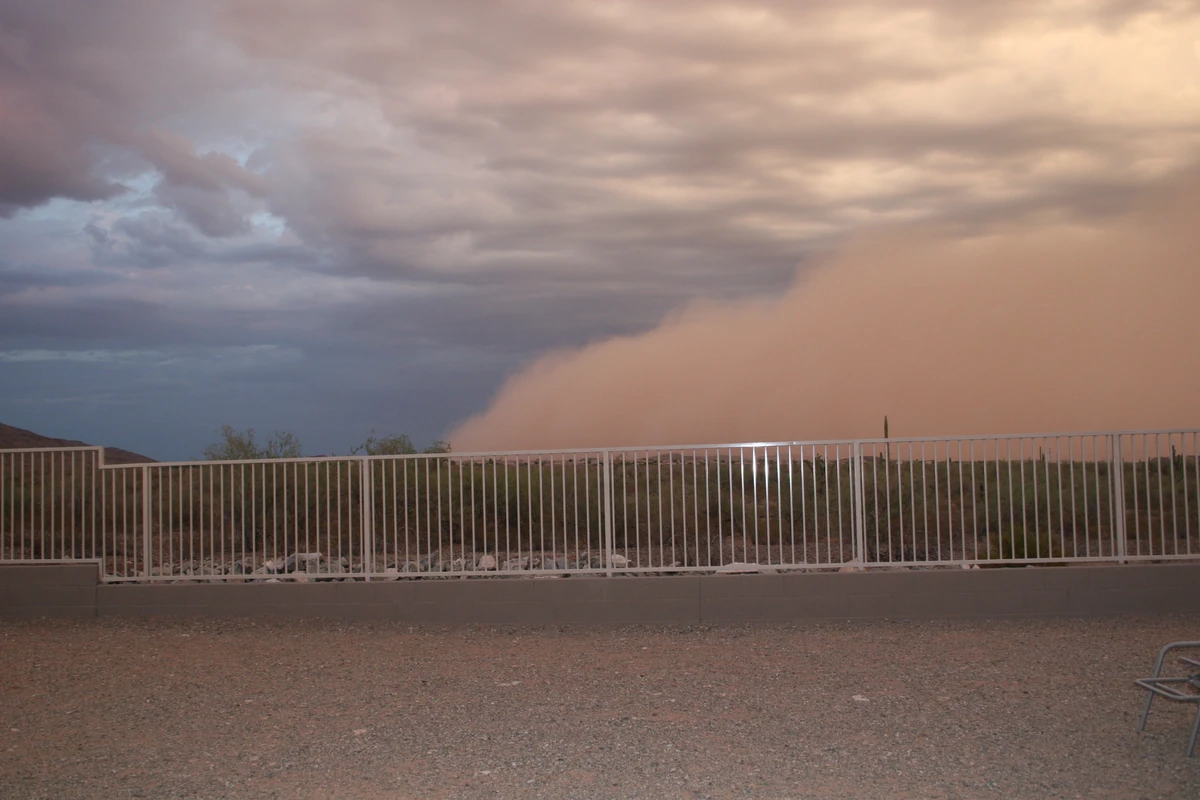
The garage is the hard case. GE says a fridge may not cool right in a room above 110 degrees. A dusty coil in that room has the least room for error. Our post on keeping a refrigerator in an Arizona garage covers the heat limits.
The Energy Savings Claim Is Mostly About Store Coolers
You will read that clean coils cut your power bill by a third or more. Look at where that kind of number comes from.
One widely shared test, released in 2015 by a consultant to the Food Service Technology Center, found a 47 percent drop in power use after a coil cleaning. That was one six year old, two door glass case of the kind you see in a store. A commercial case opens all day and sits in a busy room. Your kitchen fridge is a different machine.
We could not find a published study that measured coil cleaning savings on home fridges. The federal guide and the makers stick to plain claims. Clean coils help the fridge cool well, hold steady and last longer. ENERGY STAR says to keep the coils clean on older models and leave a few inches of space behind the fridge for air.
The bigger bill win is age. ENERGY STAR says a fridge over 15 years old could cost about $95 a year more to run. Brushing a coil will not close that gap. Treat coil cleaning as cheap insurance for the compressor, not a money machine.
Clean the Coils in About 20 Minutes
You need a long coil brush and a vacuum with a crevice tool. GE sells a 27 and a half inch brush for this job. Any long, thin appliance brush works.
- Unplug it. GE, Whirlpool and the federal guide all start here. A top mount coil needs the breaker off.
- Pop the grille. Open both doors, grip the ends of the base grille and pull it off. Some grilles have two screws.
- Brush, then vacuum. Push a long coil brush between the tubes and pull the dust toward you. Vacuum as you go.
- Go easy on the fins. Do not bend them. Whirlpool says to keep clear of the water line that feeds the ice maker.
- Clean the floor and the grille. The dust you knock loose lands under the fridge.
- Plug it back in. The federal guide says to wrap up inside two hours so food stays safe.
A top mount coil on a built in is sharper work. GE says to wear long sleeves and gloves because the fins are sharp. For photos of each step, see our full guide on how to clean refrigerator condenser coils.


What a Skipped Cleaning Can Cost in Arizona
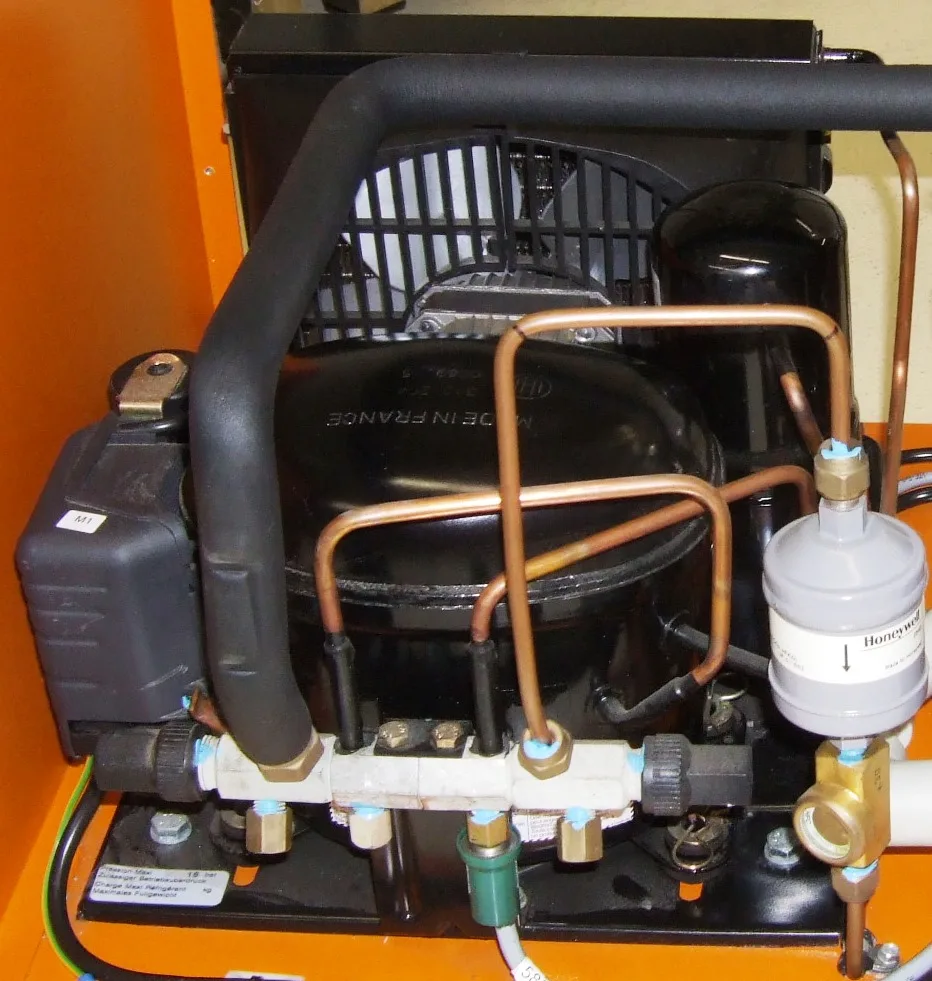
A dusty coil traps heat. The compressor runs longer to make up for it. In a hot room that strain adds up, and the parts around the coil take the hit.
Arizona price ranges from our own refrigerator repair cost guides. Bars show the top of each range.
The prices come from our own Arizona guides for a refrigerator that runs all the time and a refrigerator that is not cooling. Dirty coils are the first cause on the running constantly guide. A pro coil cleaning sits at the low end of the chart. A compressor sits at the far end.
Not every dead compressor started with dust. But a free 20 minute job is the cheapest way to take one risk off the list.
When to Call a Repair Pro
Clean the coils, then give the fridge 24 hours. Call if any of these still happen.
- The fridge side stays warm after a full day.
- You hear a click every few minutes and the compressor never settles into a hum.
- The fan by the compressor does not spin while the fridge runs.
- The back or bottom of the fridge feels hot to the touch.
We list Arizona refrigerator repair companies by city, with ratings and phone numbers, so you can call one direct.
Studies and Pages
- GE Appliances, refrigerator cleaning condenser coils
- GE Appliances, refrigerator not cooling and room temperature
- Whirlpool, how and when to safely clean the condenser coils
- Building America Solution Center, U.S. Department of Energy, clean refrigerator condenser coils
- ENERGY STAR, refrigerators
- National Weather Service Phoenix, 2025 year in review
- National Weather Service Phoenix, monsoon awareness week
- NOAA, haboobs, 2012
- Healthcare Facilities Today, coil cleaning energy data, 2015
Quick Questions
How often should you clean refrigerator coils?
Once a year in a kitchen with no pets. Every 3 to 6 months with shedding pets, in a garage or near desert dust. The federal guide says 6 to 12 months, and Whirlpool says 3 to 6 months with pets or construction dust.
Should I clean my fridge coils?
Check your model first. GE says most of its fridges built since 2001 have a NeverClean condenser, but compact and smaller top freezer models still need cleaning. If you see a gray mat of dust on the coil, clean it.
Where are the coils on my refrigerator?
Behind the base grille at the floor on most newer fridges, on the back of older ones, and up top on some built ins. Open the doors and pull the grille off to look.
Does cleaning refrigerator coils save money?
A little, and mostly on older fridges. The big savings numbers come from tests on store coolers, not home fridges. The bigger win in Arizona is a compressor that runs less in the heat.
Can I clean fridge coils without a brush?
Yes. A vacuum with a crevice tool picks up most loose dust. A long, thin brush gets between the tubes, so it does a better job on a matted coil.
Do garage fridges need their coils cleaned more often?
Yes. GE names the garage as a dusty spot that needs more cleaning, and says a fridge may not cool right in a room above 110 degrees. In Arizona, clean a garage fridge every 3 to 6 months.
Other Fixes
More Arizona Appliance Answers
Self clean heats an oven to 885 degrees and finds its weak parts. Run it by Nov. 12 for Thanksgiving 2026, at 10am on APS for about 28 cents.
A gas dryer load costs 14 to 21 cents in Arizona, electric about 33. On APS time of use, electric runs 8 to 74 cents. Repairs, gas lines and heat pumps.
A smelly dishwasher is usually a dirty filter. Match the odor to its source, from sewage to rotten eggs, plus two Arizona causes the big guides skip.
Every six months, sooner if flow slows or ice shrinks. What a fridge filter does with Phoenix water, why it misses hard water, and how to spot fakes.
About 4 hours in a closed fridge, 48 in a full freezer. What to keep, what to toss, the Arizona heat rule, and what to do if the fridge will not restart.
Once a year is the answer for most Arizona homes, and sooner after a dust storm or with a long or roof vent. The schedule, the code limits and the warning signs.
A standard fridge is built for 55 to 110 degree rooms, and Phoenix averages 106.5 in July. What happens, what garage ready means, and how to help your fridge.
White film on glasses is usually hard water scale, and Phoenix water is very hard. It covers how to tell scale from etching, how to clean it off, and how to stop it coming back.
Kenmore has never had one factory. Other makers built its appliances. The three digits before the dot in a Kenmore model number usually tell you which one.
GE Appliances has been owned by Haier since 2016. Frigidaire has been part of Electrolux since 1986. That shapes parts, warranties and repairs.
Maytag, KitchenAid, Amana and JennAir appliances are all Whirlpool Corporation brands. The family fits together a few ways, and that matters when one of them needs a repair.
Ten safe checks to run before you book an appliance repair, from power and filters to model numbers, so you save time and sometimes the call.
What common appliance repairs cost in Arizona, why prices vary, and a simple rule for deciding whether to repair or replace your machine.
A plain checklist for picking a local appliance repair company, from reviews and fees to warranties, plus how to use the directory to compare options.
Where to look for the model and serial number on a washer, dryer, fridge, dishwasher and range, and why that number decides which part fits.
A nut driver is the most used hand tool in appliance repair. Learn what it is, which sizes to buy, and how it differs from a screwdriver or a socket set.
Find a refrigerator repair pro near you.
Browse independent appliance repair companies by city, ratings, hours, and phone numbers, no middleman.