Dryer Not Heating? Causes, Tests and Costs in Arizona
The drum turns and the cycle runs, but clothes come out cold and damp. No heat is the single most common dryer service call, and on electric dryers it almost always comes down to three cheap parts, element, thermal fuse, or thermostat.
If your dryer runs but does not heat, check the 240 volt breaker first, then the vent, then the thermal fuse and heating element. In Arizona a pro charges $100 to $280 for the fix, and the first two checks are free.
Dust storms, long roof vents and monsoon power outages cause some of the Arizona only problems. This guide gives the tests in the order a pro runs them, with the price of each fix.
Dryer Not Heating costs $100 to $280 for a pro repair in Arizona, parts and labor included.
- Parts $15 to $90, labor $80 to $200, about 45 to 90 minutes on site.
- Priciest fix is the heating element burned out (electric), up to $280.
- 5 of 5 common causes are DIY friendly. Difficulty is moderate.
- Repair.
Averages for independent repair companies. The service call fee of $75 to $150 is usually applied toward the repair. Costs vary by brand, model, and city.
The Short Version
- Check the power first. An electric dryer needs 240 volts, and a breaker that looks on can still be the problem. Free to fix.
- Check the vent second. A clogged or crushed vent is the top reason the heat quits, and it kills parts if you ignore it.
- Thermal fuse next. It is a one shot safety part. A pro charges $80 to $180, and you can do it yourself for the price of the fuse.
- Heating element after that. A pro charges $150 to $280. Test it before you buy one.
- Gas dryer? Open the gas valve, then call a pro. Igniter and coil work runs $120 to $230.
- Never bypass the fuse. It is there to stop a fire.
Five Minute Checks That Cost Nothing
Do these before you spend a dime. Most of them take less time than reading this page.
Run an empty heated cycle. Maytag tells you to pick a heated timed cycle, run it for 5 minutes with the drum empty, then open the door and feel inside (Maytag product help). If it is warm, the dryer works and your problem is airflow or a wet load.
Look at the setting. Air Only and Air Fluff cycles never add heat. Eco and cool settings are low on purpose. Pick a normal heat setting and try again.
Clean the lint screen. Pull it out, wipe it, and hold it up to the light. A film of fabric softener can block it even when it looks clean.
Check the breaker. Maytag says an electric dryer runs on its own 30 amp circuit with two breakers, one for the motor and one for the heat. Either one can cause no heat. Flip the dryer breaker all the way to off, then all the way back on.
Gas dryer. Make sure the gas shutoff valve behind the dryer is open. The handle should line up with the pipe. If you ever smell gas, leave the house and call your gas company.
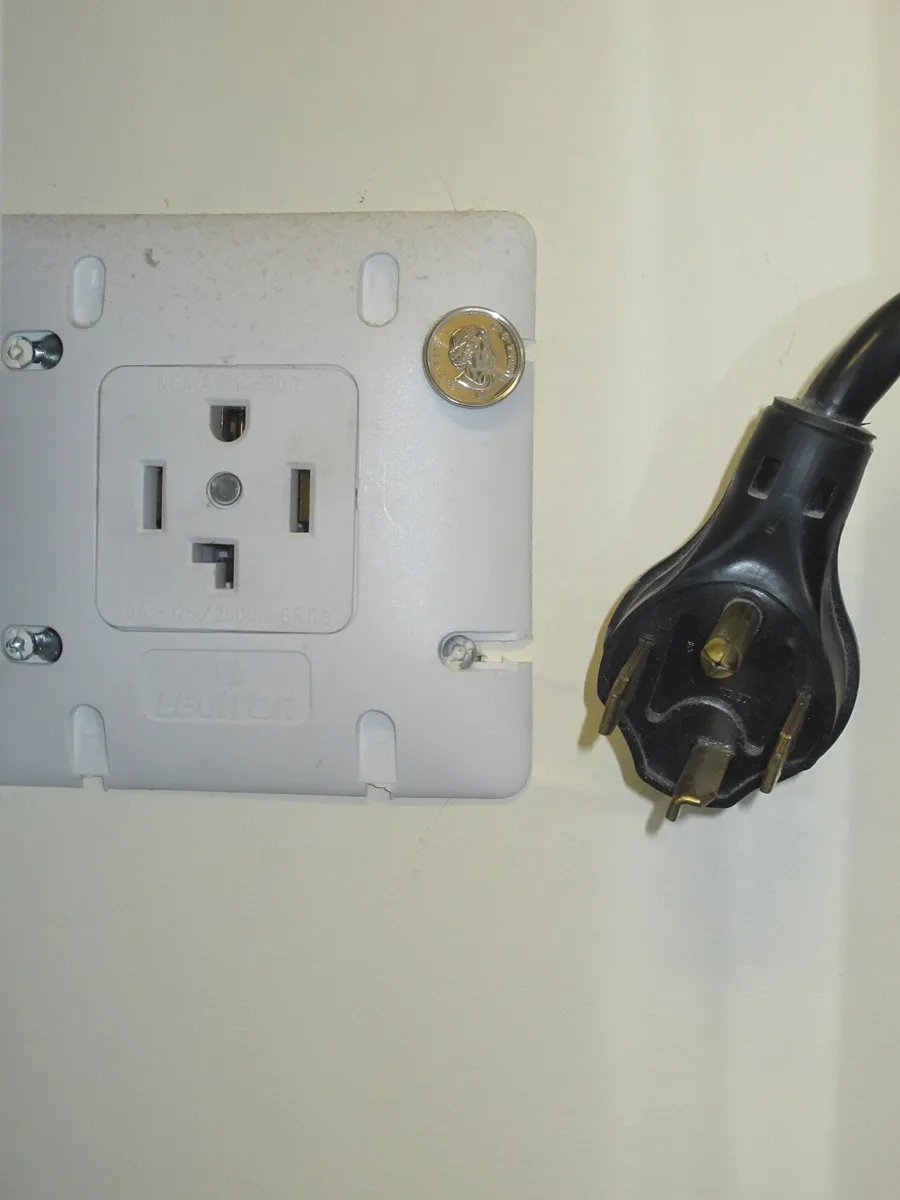
The wall outlet in the photo is the kind most electric dryers use. If the plug feels loose, looks burned or the cord ends were never tightened, stop and call an electrician. Maytag also says the terminal screws at the back of the dryer should be tight, with the dryer unplugged first.
Cause 1. A Half Tripped Breaker or Weak 240 Volt Power
The drum is turning, so the dryer has power. But the drum motor uses half of the 240 volt supply. The heater needs both halves. If one side is dead, you get tumbling with no heat.
How to test it. Turn the breaker fully off and on. If heat comes back, you are done. If it trips again, do not keep resetting it. Something is drawing too much power and an electrician needs to look.
Cost. $0 for a reset. DIY friendly. A pro dryer repair call starts at a $75 to $150 service fee, so a reset is worth trying first.
Cause 2. A Clogged or Crushed Vent
This is the one to fix even if it is not your main problem. Hot air has to leave the dryer. If it cannot, the dryer overheats and shuts the heat off to protect itself. That is also how parts burn out.
The U.S. Fire Administration looked at home dryer fires from 2008 to 2010 and found failure to clean was the leading factor at 34 percent (USFA report summary). Lint and dust were the first thing to burn in 28 percent of those fires.
How to test it. Pull the dryer out, disconnect the duct and look inside it. Then go outside and check the hood. The flap should open wide when the dryer runs. Whirlpool says to keep the hood at least 12 inches off the ground or any object, and to use 4 inch metal duct, because foil and plastic crush easily (Whirlpool venting help).
Cost. Free to $20 for a brush kit or new duct if you do it yourself. Follow our dryer vent cleaning guide. If the dryer is new and the vent is old, a long run may be the reason it will not heat well.
Cause 3. A Blown Thermal Fuse
The thermal fuse is a small safety part. When exhaust heat spikes, it blows and cuts the heat or the whole dryer. It cannot be reset. Mr. Appliance says not to bypass safety devices such as thermal fuses, and we agree (Mr. Appliance).
How to test it. Unplug the dryer. Set a multimeter to ohms and touch both fuse terminals. A good fuse reads close to zero. A blown one reads open.
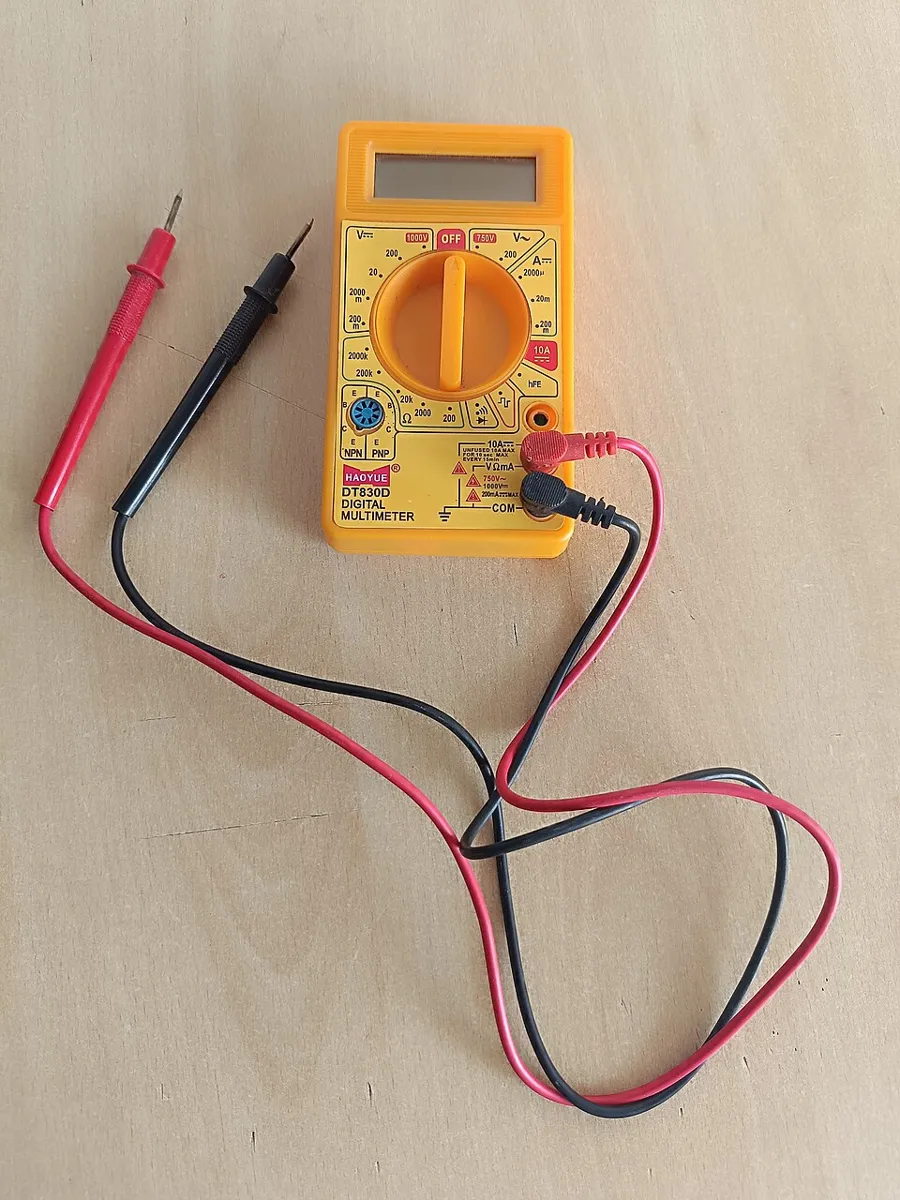


Cost. $80 to $180 with a pro, parts and labor. DIY friendly if you are handy. Our thermal fuse replacement guide walks through it. A fuse that blew once will blow again if the vent is still clogged, so clean the vent in the same visit.
Cause 4. A Burned Out Heating Element
On an electric dryer, the element is a long metal coil that glows like a toaster. Over time it breaks, much like an old bulb filament. Signs are a tumbling drum, damp clothes after a full cycle, and sometimes a visible gap in the coil. Restricted airflow often overheats the coil and shortens its life.
How to test it. Unplug the dryer, remove the back or bottom panel, and check the element for continuity with the multimeter. Mr. Appliance lists a continuity check as the way to confirm a broken element. No reading means it is open and needs replacing.
Cost. This is the priciest fix at $150 to $280 for a pro. It is DIY friendly with moderate difficulty. Our heating element guide covers it step by step in about 45 to 90 minutes.
Cause 5. A Bad Cycling Thermostat or Thermistor
The thermostat or thermistor reads drum temperature and tells the heater when to turn on and off. When it fails, it usually fails cold. Mr. Appliance lists a worn cycling thermostat as one reason a dryer heats and then stops mid cycle.
How to test it. Same multimeter check as the fuse. If the thermal fuse and the element both test fine and the vent is clear, this is the next suspect.
Cost. $100 to $200 with a pro. DIY friendly, but a wrong guess gets expensive, so call a pro if you are not sure.
Cause 6. Gas Dryer Igniter or Valve Coils
Gas dryers do not have an element. They light a burner. If you see the igniter glow but no flame ever appears, the valve coils are the classic failure. If the drum runs and there is no glow at all, the igniter is the likely culprit.
Cost. $120 to $230 with a pro. We suggest you leave gas work to a pro. Mr. Appliance warns against servicing gas parts without training and tools.
Bars run on a 0 to 280 dollar scale and show the top of each range. Numbers are the repair ranges on this page from Arizona Appliance Repairs, parts and labor included. Chart made by us from those numbers.
Every cause on that chart is under $300 with labor. That matters when you decide between fixing and replacing.
The Arizona Angle
Most pages on this topic were written for places with snow and cold basements. Here are three Arizona reasons a dryer loses heat that those pages skip.
Dust storms and the outside hood. NOAA says one to three large dust storms move into the Phoenix area in a given year, with walls of dust up to 10,000 feet high and winds up to 60 mph (NOAA haboob page). On August 25, 2025, the National Weather Service reported visibility under a quarter mile and winds near 50 to 65 mph across the Phoenix metro (NWS Phoenix). That dust gets into hoods, mixes with lint and cakes inside the duct. After a big storm, go look at the hood. Our guide to cleaning a dryer vent in Arizona says to check it after every one.
Long roof runs. Many Arizona homes put the laundry in the middle of the house, so the duct climbs and exits through the roof. The Building Energy Codes Program says to use smooth metal duct no longer than 35 feet, including the equivalent length of bends (PNNL). Its guidance takes 5 feet off the allowance for each 90 degree bend. Two bends leave you 25 feet. Your dryer manual has its own chart and it controls. A roof run with extra bends and a rusted flap is exactly where lint piles up. In a Phoenix attic that heat also bakes the duct, so check seams for gaps.
Monsoon power flickers. The monsoon runs June 15 to September 30 (APS). Storms knock out power, and APS tells customers to unplug unnecessary appliances so electrical spikes do not hit them when power returns (APS storm prep). We suggest you also check the dryer breaker after any outage. A breaker that did not reset cleanly is a free fix that looks like a dead heater.
If your dryer is in a hot Tucson or Phoenix garage, airflow matters even more. The dryer is already pulling in very warm air, so a weak vent leaves it hotter inside. Our Phoenix repair page lists local companies if you want a pro.
When to Call a Pro and What to Say
Call a pro when the breaker keeps tripping, you smell burning, you have a gas dryer, or you have done the free checks and the parts tests and still have no heat. Also call if the cord or outlet looks burned. Do not use a dryer that smells like smoke. Unplug it.
Tell them the brand and model, whether it is gas or electric, and that the drum turns but there is no heat. Say what you already checked, such as the breaker, the vent and the lint screen. Ask for the price before they open the dryer. A $75 to $150 service call fee is normal in Arizona and usually applies toward the repair. Find a pro in our washer and dryer repair directory.
Repair or Replace
Repair it. Almost every no heat cause costs under $300 with labor. Mr. Appliance gives two rules. Replace if the repair is 50 percent or more of a new dryer, or if the dryer is over 15 years old and repairs keep coming.
InterNACHI puts the life of a clothes dryer at about 13 years (InterNACHI life expectancy chart). The same chart gives 20 years for a steel dryer vent and 5 years for a plastic one. That is another reason to use metal duct. A dryer under 10 years old with a $100 to $200 fix is a clear repair. At 13 years or more, weigh the price against a new machine.
What causes it, and what each fix costs
Heating element burned out (electric)
The coil breaks like a lightbulb filament, often from restricted airflow overheating it. See the element guide for details.
Thermal fuse blown
A one shot safety fuse that kills heat (or the whole dryer) when exhaust temps spike, almost always because the vent is clogged. Replace the fuse AND clean the vent, or it will blow again.
Gas igniter or valve coils (gas)
See the gas dryer guide, glow but no flame is the classic coil failure.
Half tripped breaker (electric)
Electric dryers use a double 240V breaker. If one leg trips, the drum runs but heat is dead. Reset fully off then on. Free.
Cycling thermostat or thermistor
Regulates drum temp. Fails cold.
Repair or replace?
Repair. Virtually every no heat cause is under $300 including labor. Dryers are simple machines, they’re usually worth fixing well past 10 years.
Sources
Where the safety, regulatory and warranty claims on this page come from. Repair costs are our own figures based on Arizona market rates and OEM parts pricing.
- Home Fires Involving Clothes Dryers and Washing Machines National Fire Protection Association Dryer fire incidence, and failure to clean as the leading contributing factor.
- Carbon Monoxide Safety Guide U.S. Consumer Product Safety Commission Carbon monoxide risk from gas cooking and heating appliances.
Sources we checked
- producthelp.maytag.com
- mrappliance.com
- producthelp.whirlpool.com
- fireengineering.com
- noaa.gov
- weather.gov
- basc.pnnl.gov
- aps.com
- aps.com
- nachi.org
Last checked October 20, 2026.
We'll quote you on hauling it away, or buying it.
Not every dryer is worth repairing, and we'd rather tell you that than sell you a repair. If you're replacing it, we'll give you a free quote either way. Scrap pickup for a machine that's finished, or a cash offer if it still has life in it. Working units, recent models and premium brands are often worth real money.
Quick Questions
Why is my dryer running but not heating?
The top causes are a tripped breaker, a clogged vent, a blown thermal fuse and a burned out heating element. On a gas dryer it can also be a closed gas valve or a bad igniter. Start with the free checks, then test the fuse and element.
What is the most common reason a dryer stops heating?
A restricted vent is the most common starting point because it makes the dryer overheat and blow its thermal fuse. After that, the heating element is the next most common part to fail on electric dryers. Fix the vent when you replace either part.
How do I know if the thermal fuse or the heating element is bad?
Unplug the dryer and test each part for continuity with a multimeter. A part that reads open is dead. If the fuse is dead, clean the vent too, or the new one will blow.
Can a tripped breaker cause a dryer to run without heat?
Yes. An electric dryer uses 240 volts, and the motor and the heater draw from separate sides. If one side is off, the drum turns and nothing heats. Turn the breaker fully off, then on. If it trips again, call an electrician.
How much does it cost to fix a dryer that is not heating in Arizona?
A pro charges $100 to $280, parts and labor included, with a service call fee of $75 to $150 that usually applies to the repair. A thermal fuse runs $80 to $180 and a heating element runs $150 to $280. A breaker reset is free.
Is it worth fixing a dryer that is not heating?
Usually yes. Every common cause is under $300, and Mr. Appliance says to replace only when the repair is 50 percent or more of a new dryer or the dryer is over 15 years old and failing often.
Can I run my dryer if it is not drying properly?
Do not keep running it if it feels very hot or smells burnt. A clogged vent is a fire risk, and the U.S. Fire Administration lists failure to clean as the leading factor in home dryer fires. Unplug it and check the vent first.
Why did my dryer stop heating right after I moved it?
The flex vent behind it likely got crushed. Restricted airflow trips the thermal fuse fast. Replace crushed foil vent with semi rigid metal duct.
Electric vs gas, which costs more to fix?
About the same for no heat. Element ($150 to 280) vs igniter/coils ($120 to 230). Gas repairs should go to a pro. Electric elements are a common DIY.
Model specific guides for this problem
Find a dryer repair pro near you.
Browse independent appliance repair companies by city, ratings, hours, and phone numbers, no middleman.